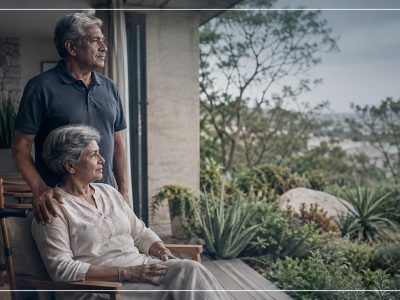
When people think about retirement planning, the conversation almost always begins with money. Will I have saved enough? Will my investments keep pace with inflation? What if markets fall? How will I fund rising healthcare costs? While these are important questions that deserve careful attention, bear in mind that a retirement plan must account for longevity, investment risk, tax, inflation, liquidity, healthcare costs and the financial security of a surviving spouse.
In practice, we find that many retirees discover that their greatest fears are not limited to whether their capital will last. They worry about losing independence, becoming a burden on their children, caring for an ageing spouse, navigating a world that feels increasingly complex, losing mental sharpness, or reaching a stage where they no longer feel useful or in control. Retirement is a major life transition that brings with it physical, emotional, relational and practical challenges. A person can be financially comfortable and still feel vulnerable, while someone with more modest means may feel relatively secure if they have a clear plan, supportive relationships and realistic expectations. As such, good retirement planning should therefore prepare people not only for the financial realities of retirement, but also for the human realities of growing older.
Losing independence
One of the most unsettling aspects of ageing is that the loss of independence often happens gradually.
Tasks that were once routine can become more difficult. Driving at night, standing in queues, carrying groceries, maintaining a home, managing paperwork or attending medical appointments may slowly begin to require more effort. While at first these changes may seem minor, they can affect a retiree’s confidence, mobility and sense of autonomy – and for many people it’s the loss of choice that comes with it that they fear most. This is likely because independence is closely linked to dignity – being able to make decisions, manage daily life and participate meaningfully in the world is central to a retiree’s wellbeing. When those freedoms start to narrow, even small limitations can feel significant.
This is why retirement planning should include practical conversations about where a person will live, whether their home remains suitable, what support they may need in future, and whether downscaling or moving closer to family or healthcare facilities should be considered. Too often, these decisions are postponed until a crisis occurs, at which point choices may be limited and emotions heightened.
Cognitive decline and vulnerability
Many retirees also worry about losing mental sharpness. Tasks that once felt straightforward — paying bills, managing investments, dealing with medical aid claims, filing tax returns or keeping track of important documents — can slowly begin to feel overwhelming. For someone who has spent a lifetime managing their own affairs, the thought of becoming dependent on others can be particularly unsettling.
Cognitive decline also raises practical questions. Who will notice if a retiree is no longer coping? Who understands the investment strategy? Who knows where important documents are kept? Who has access to the relevant professionals? Who will help ensure that decisions are made in the retiree’s best interests? Although these questions are uncomfortable, it’s important that they are not left until a diagnosis has been made or capacity has already deteriorated. Families should be encouraged to discuss future decision-making early, ensure that both spouses understand the household finances, keep key documents up to date, and obtain proper legal advice where there is a risk of incapacity. The aim is not to control every possible outcome, but to reduce confusion, conflict and vulnerability if the retiree can no longer speak fully for themselves.
A more complex world
Technology has introduced another layer of vulnerability in retirement, bearing in mind that banking, healthcare, communication, investments, travel, tax and government services are increasingly digital. While some older individuals adapt well to technology, others struggle to keep up with constant changes in platforms, passwords, authentication processes and security requirements. A retiree who cannot confidently use online banking, identify suspicious messages or manage digital accounts may become increasingly dependent on others – and while this dependence can be frustrating, it can also be risky.
Older people are frequently targeted by scammers, particularly where there is confusion around digital platforms, online banking or cybersecurity. Fraudulent investment offers, phishing emails, fake banking messages and impersonation scams can cause significant financial and emotional harm. Even sophisticated retirees can be vulnerable when they are stressed, grieving, isolated or unsure whom to trust. Digital confidence has therefore become part of retirement security. Simplifying financial affairs, limiting unnecessary complexity, keeping trusted advisors involved and ensuring that retirees know who to contact before acting on suspicious requests can all help reduce risk.
Caring for a spouse
For many retirees, one of their greatest fears is not what happens to them, but what happens to their spouse. As life expectancy increases, it is common for one partner to become the caregiver for the other – which may involve managing medication, attending medical appointments, assisting with mobility, handling household responsibilities and making difficult care decisions. This can be an exhausting job, and it’s not uncommon for the healthy spouse to experience guilt, frustration, sadness, loneliness and resentment, often while suppressing their own needs.
In our experience, this is an area often underestimated in retirement planning. While couples may plan carefully for investment income, they often give far less thought to what happens if one partner becomes frail, disabled or cognitively impaired. We believe that a comprehensive plan should therefore consider the financial and practical implications of care, including the affordability of home-based care, assisted living, frail care, medical support and respite care, as well as the likely impact on the healthy spouse’s lifestyle. It should also include honest discussions with adult children about what role, if any, they are willing and able to play. Without these conversations, families often default into arrangements that may be emotionally unsustainable or financially unrealistic.
Purpose, identity and connection
For many people, work provides not only income, but it creates structure, purpose, social contact and a sense of relevance. When that falls away, retirement can feel unexpectedly disorientating, particularly for those whose identity has been closely tied to a career, business or leadership role. This is why we believe the most successful retirements are not planned around leisure alone. People still need connection, stimulation and a reason to get up in the morning – and this aspect of retirement should be carefully planned for. That said, purpose does not necessarily need to be formalised – it may come from mentoring, volunteering, learning, helping with grandchildren, pursuing interests or becoming more involved in a community. Simply put, a retirement plan that provides income but leaves a person bored, isolated and unsupported is incomplete.
Planning for uncertainty
Perhaps the common thread running through most retirement fears is uncertainty. Retirement forces people to confront questions about ageing, health, dependency, mortality, family relationships and personal relevance – all of which are deeply human concerns that cannot be solved solely through investment returns, retirement calculators or tax-efficient structures. While financial security remains essential, bear in mind that true retirement security is broader than a healthy balance sheet. For advisors, this means retirement planning must go beyond product selection and income projections. It requires listening carefully to what clients fear, even when those fears are not expressed in financial language. It means asking better questions about family dynamics, future care, decision-making, vulnerability, lifestyle and legacy. For retirees and their families, it means having honest conversations before circumstances force them.
In our experience, what retirees fear most is not simply running out of money – it’s running out of independence, dignity, connection, clarity and control. Our challenge therefore as advisors is to help them prepare not only for the cost of retirement, but for the experience of retirement.
Have a fabulous day.
Sue